


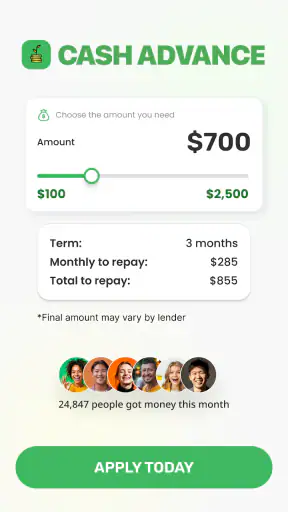
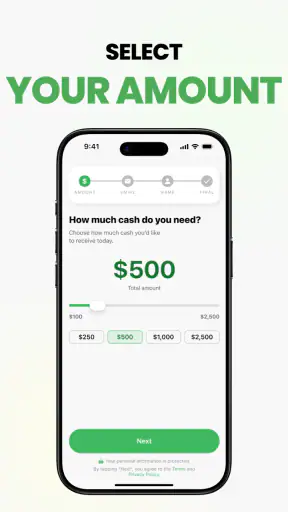
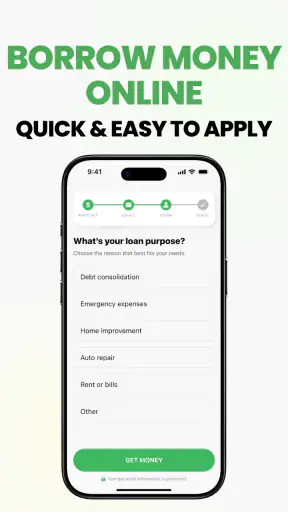
When an unexpected bill lands between paydays, the hardest part is often not finding a borrowing app but understanding what you are agreeing to. I approached Instant Cash Advance Loan App with that in mind: not as a magic solution, but as a finance tool for people who need to explore a short-term cash advance quickly and want the process kept in one place. My overall impression is useful but cautious. The app is easy to understand at a glance, yet the decision to borrow still requires more attention than the simple interface may suggest.
This is a free finance app from Fast Online Loans, aimed at adults who want to investigate borrowing without visiting a traditional branch. It has a 4.7 average from around 52 thousand ratings, and its reach has passed one million installs. Those figures suggest that many people find the concept approachable, although popularity should never be treated as proof that a loan is affordable for every applicant.
How the app feels in its current state
The main strength is focus. Rather than presenting itself as a broad budgeting suite, the app centers the user’s attention on a cash advance request. That makes it easier to begin when the need is specific: an urgent household expense, a payment that cannot wait, or a temporary gap before regular income arrives. I prefer this directness to apps that bury their borrowing option under unrelated financial tools.
At the same time, a focused loan app can encourage rushed decisions. The first screen may answer “how do I apply?” more readily than “should I borrow?” That distinction matters. Before entering personal information, I would write down the amount needed, the date I expect to repay it, and the maximum total cost I can realistically handle. Doing this outside the app gives the process a useful boundary instead of letting the application flow determine the size of the request.
The app is listed for Everyone, which makes its presentation broadly accessible. That label describes content suitability, not financial suitability. A person can find the screens simple to navigate and still be too young, financially stretched, or otherwise ineligible for a particular lending decision. I would treat the age label as an indication of general app content, not as a promise that every user will qualify.
Its current version is 2.0.9, and the app runs on Android 7.0 or later. That relatively broad system support is convenient for people using older phones, especially if replacing a device is not an option while dealing with a cash shortage. I would still keep the operating system updated where possible, because financial activity deserves a phone with current security protections and a screen lock.
The practical journey I would use
I would begin by checking that I am using the official app identity and that the developer name shown in the store matches Fast Online Loans. After opening it, I would read each request for information rather than tapping through automatically. A loan application is not the place for guessed details, temporary email addresses, or information copied from an old form without checking it.
My next step would be to decide whether the request is for a genuine short-lived gap. A cash advance can make sense when a known incoming payment is close and the expense is unavoidable. It is a much weaker choice for recurring groceries, rent that is already unaffordable, or an old debt that is being rolled into a new one. In those cases, I would first look at a payment arrangement, employer support, a community resource, or a lower-cost credit option.
One useful habit is to keep a note of every figure shown during the process. I would record the amount requested, the expected repayment amount, any timing information, and the name of the party responsible for the offer. This creates a reference point if the final terms differ from the initial impression. It also prevents the common mistake of remembering only the amount received while forgetting the amount that must leave the bank account later.
I would not submit an application while connected to an unknown public network, and I would avoid storing screenshots that expose sensitive personal or banking details. If the phone is shared, I would also review notifications and recent-app previews so that private financial information is not visible to someone else. These steps are not special features of the app; they are practical safeguards for using any borrowing service on a mobile device.
What the version information tells existing users
The presence of version 2.0.9 shows that the product is not frozen at its first release. Its release date was August 15, 2021, so the app has had time to move beyond its original launch. That is encouraging in a limited sense: an actively maintained product can respond to compatibility problems and refine its flow. However, a version number alone does not tell me whether a change improved disclosure, reduced application friction, or simply addressed technical maintenance.
For someone already using the app, the sensible approach is to update through the normal app store channel and then recheck the screens that matter most. I would look again at the repayment information, consent wording, contact details, and any account settings before starting a new request. Even a small interface change can move an important explanation to another page or alter the order in which information appears.
Existing users should also avoid assuming that a previous experience guarantees the same result today. Loan decisions can depend on the individual application and the circumstances at the time of review. A successful past request is not a standing approval, and a declined request does not necessarily mean the app is unusable forever. I would judge each application on its current terms rather than on memory.
The update history is also a reminder to separate product evolution from financial expectations. A newer build may feel smoother, but it does not automatically mean borrowing has become cheaper, faster, or more suitable. I would use the current version for technical compatibility while making the affordability decision independently.
Where it helps in ordinary life
Imagine a person discovers that a necessary appliance has stopped working just before payday. They have a confirmed income date, the repair cannot reasonably wait, and they are comparing several ways to cover a modest shortfall. In that situation, this app can serve as a convenient place to investigate a cash advance without a branch visit. The useful part is not simply speed; it is having a structured application path that can be reviewed from a phone.
Even in that scenario, I would compare the app with alternatives before accepting anything. An employer advance, a direct payment plan with the service provider, help from a trusted family member, or an existing bank product may create less pressure. The app is most defensible when the expense is one-off, the repayment date is dependable, and the full obligation fits comfortably after essential bills.
Another realistic use is comparison shopping rather than immediate borrowing. A user can start by learning what information is needed and what kind of offer may be available, then pause before accepting. That pause is important. An application screen is not a command to continue, and taking time to compare is often the difference between a manageable bridge and a difficult cycle.
I would be especially careful if the requested money is intended for a recurring expense. If the same shortfall appears every month, a quick advance treats the symptom while adding another payment. In that situation, a budgeting review or a conversation with a nonprofit debt adviser is more appropriate than repeatedly opening a loan app.
How it compares with familiar alternatives
Compared with visiting a bank branch, a mobile cash advance app is more convenient and less dependent on opening hours. That can matter for someone with limited transport or an urgent deadline. The trade-off is that a branch conversation may provide more opportunity to ask questions face to face, while a compact mobile flow can make a complex decision feel deceptively simple.
Compared with a bank overdraft or an established credit line, this app may appeal to people who do not already have those products. An existing financial provider may offer clearer account history and a familiar support channel, though eligibility and cost vary. I would check the total repayment and timing for both options rather than choosing based only on which application opens faster.
Compared with a credit card, a cash advance application can be more targeted for a single short-term need, while a card may offer a reusable facility. Reusability is not automatically an advantage: it can make repeated borrowing feel normal. On the other hand, a card or credit union product may be preferable when its terms are transparent and the user can repay without carrying a balance.
Compared with informal borrowing from family or friends, the app offers privacy and a formal digital process. Informal help may have lower financial cost but can affect relationships, so there is no universal winner. My advice is to compare the practical consequences, not just the interest or fee displayed on one screen.
Small details that deserve extra attention
The first non-obvious point is that speed should be treated as a reason to slow down, not a reason to skip reading. When money is urgent, users often focus on whether an application can be completed quickly. I would instead use the quick flow as a way to gather information, then stop at every point where the repayment obligation becomes clearer. A fast application is useful only if the borrower remains in control.
The second is to separate approval from affordability. Even if an offer appears available, I would calculate what remains after rent, utilities, food, transport, and existing commitments. A repayment that looks small in isolation can be difficult when it lands beside several automatic payments. The right question is not “can I receive this amount?” but “can I repay it without creating another emergency?”
The third is to preserve an audit trail. I would save a private note with the date of the request, the amount, the repayment information, and any confirmation reference, while keeping sensitive screenshots protected. If the app changes its layout later, that note helps me remember what I accepted. It is also useful when checking a bank statement against the expected transaction.
A fourth practical insight is to distinguish the app from the lender or decision-maker behind a particular offer. The developer is Fast Online Loans, but the presence of an application does not mean every user receives identical terms. I would read the final agreement carefully, identify who is responsible for the offer, and use the named support route if something is unclear. Never rely on a generic assumption about how a loan “usually” works.
Where the experience still has friction
The biggest limitation is inherent to the category: convenience can compress a serious financial decision into a few taps. The app may be a good starting point for a request, but it cannot remove the cost or risk associated with repayment. Users looking for long-term financial planning, debt reduction, savings goals, or detailed spending analysis will likely need a different kind of finance app alongside it.
I also would not recommend it to someone who is already missing payments or using one advance to cover another. A new short-term obligation can increase pressure, particularly when income is irregular. The same applies to anyone who cannot identify a realistic repayment date. In that position, seeking advice and negotiating existing bills is more responsible than applying again.
People who need extensive human guidance may prefer a bank, credit union, or local advice service. A mobile interface is efficient, but efficiency is not the same as personal explanation. If I had questions about the total cost, repayment schedule, data handling, or consequences of late payment and could not find a clear answer before submitting, I would stop rather than guess.
There is also a privacy trade-off worth considering. Any finance application involves sensitive information, so I would review the permissions and privacy explanations shown on the device and in the store before continuing. I would not grant access that seems unrelated to the application, and I would be wary of messages asking for credentials or payment outside the normal process.
What I would watch before accepting an offer
I would pay attention to the complete repayment amount rather than the amount advertised at the beginning. I would check when repayment is due, whether the date fits my actual income schedule, and what happens if that schedule changes. I would also look for the official customer-support route and keep a copy of the agreement or confirmation in a secure location.
I would watch for pressure tactics, unexplained requests for upfront payment, or instructions that move the transaction away from the app’s normal process. Those signs would make me stop and verify the situation independently. A legitimate-looking interface is not a substitute for careful checking, especially when personal and banking information are involved.
For returning users, I would watch how the current version behaves after an update: whether important terms remain easy to locate, whether confirmation details are clear, and whether the app still works reliably on the phone. I would not interpret a smoother screen as evidence of a better financial deal. Product improvements and loan economics are separate questions.
Finally, I would watch my own borrowing pattern. One carefully planned advance may solve an isolated problem; repeated use is a signal that the underlying budget needs attention. Setting a personal rule not to use the app for routine expenses is a simple way to prevent a temporary tool from becoming part of an expensive monthly cycle.
My recommendation
After looking at the app as a practical borrowing tool, I see a clear place for it: someone with an urgent, one-time shortfall who wants to explore a cash advance from a phone and is prepared to inspect the terms carefully. The free download and broad Android compatibility make it easy to try, while its strong user rating and large install base indicate that it has reached a substantial audience.
Still, I would not recommend accepting money simply because the process feels convenient. I would compare it with a bank product, credit union option, payment arrangement, employer support, or trusted personal alternative. I would also calculate the repayment against essential expenses before making any commitment.
My honest view is that this is a useful application for investigating a short-term option, not a replacement for an emergency fund or a long-term financial plan. If you have a dependable repayment path and treat the app as a tool for careful comparison, it may fit the situation. If your income is already stretched, the expense is recurring, or the terms are unclear, I would skip the application and look for lower-risk help instead.


